



The Minister for Gender, Children and Social Protection, Dr Agnes Naa Momo Lartey, paid a follow-up visit on Thursday, April 2, 2026, to the Accra Psychiatric Hospital to monitor the welfare of a family at the centre of the widely reported Bulemi case, in which a woman was allegedly preparing unsafe meals for her children.
The visit comes weeks after Dr Lartey first intervened, visiting the family at their home in the Weija Gbawe Municipality, which led to their admission for medical and psychological care.
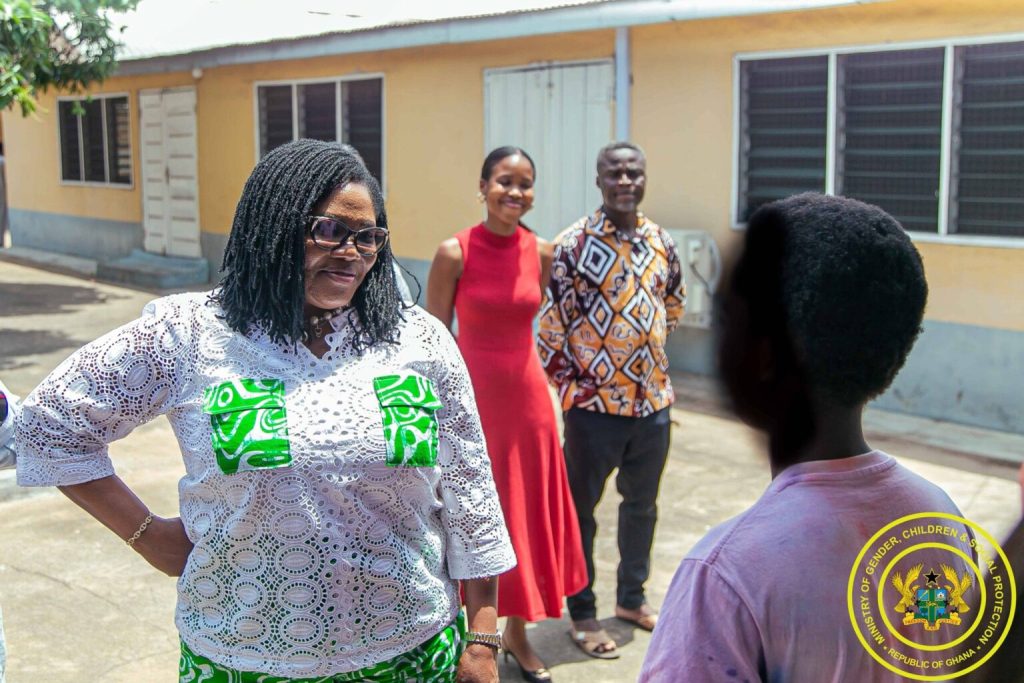
At the hospital, the Minister met the woman and observed steady improvement since treatment began. She also spent time with the woman’s two sons, who are showing encouraging signs of recovery under professional care, and engaged with the children’s father to ensure a stable and supportive environment for the boys.
Beyond the family, Dr Lartey interacted with other patients, offered words of encouragement, and presented relief items and personal supplies to support the family.
The Director of the Accra Psychiatric Hospital, Dr Kwadzo Marfo Obeng, commended the Minister for her timely intervention and continued involvement, stressing the importance of early action, sustained care, and close collaboration between health professionals and social services.
Dr Lartey reaffirmed the government’s commitment to protecting vulnerable persons and ensuring access to care and social protection services. She also met with Social Welfare Unit officers at the hospital, urging stronger coordination to help families rebuild their lives beyond institutional care.
Officials noted that steps are being taken to secure a stable future for the children, including continued monitoring, psychosocial support, and plans to reintegrate them safely into school and home life. Efforts are also underway to strengthen social protection systems, including reassessment and potential expansion of the LEAP programme to better identify and support vulnerable individuals.
