



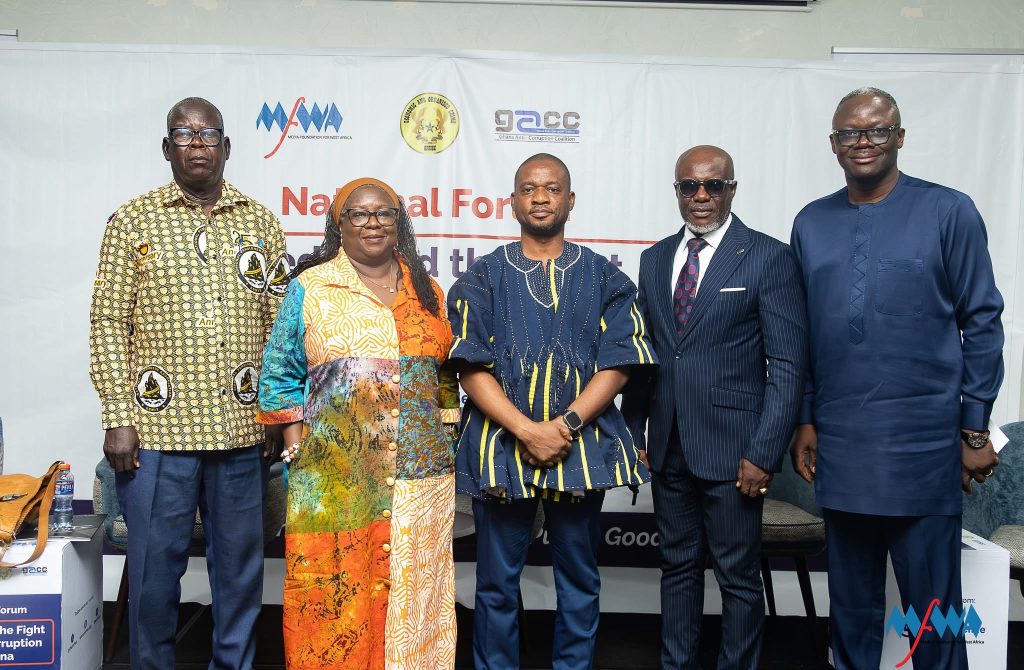
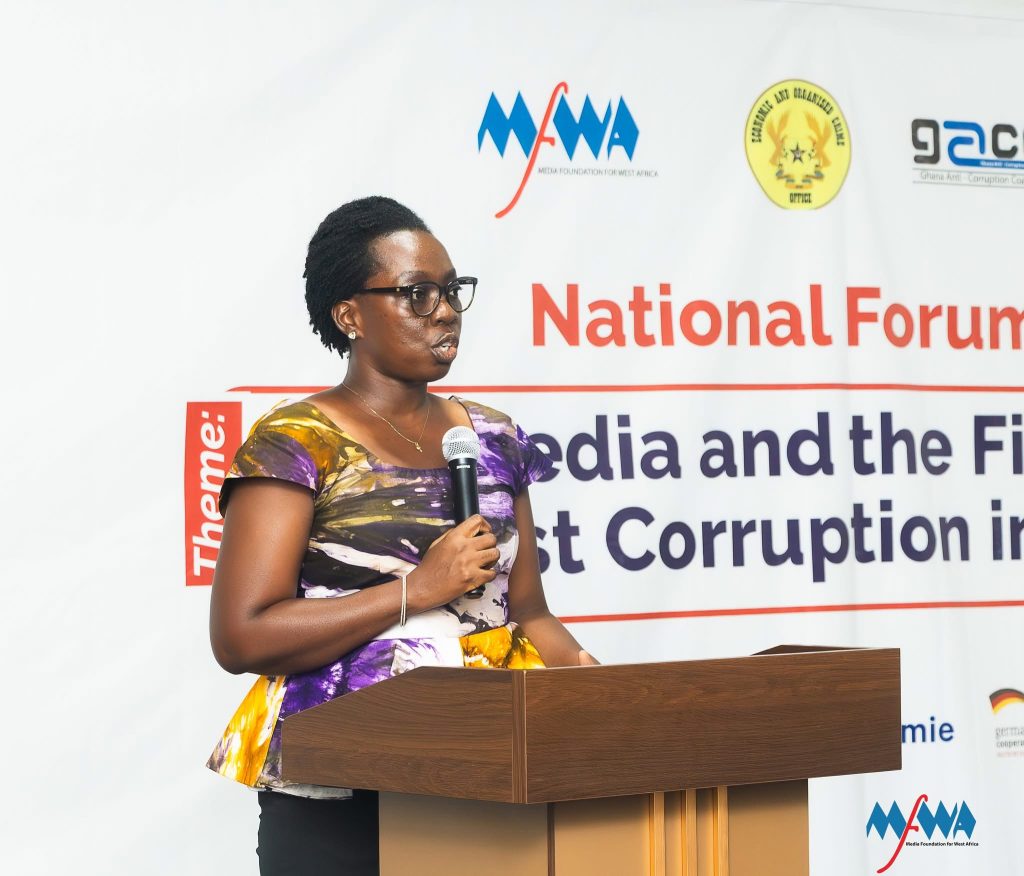
The Solicitor General from the Office of the Attorney-General, Helena Akpene, has said the fight against corruption in Ghana requires coordinated action between a strong media, enforcement agencies, and citizens.
Delivering a keynote address on behalf of the Attorney-General, Dr. Dominic Ayine, at the National Forum on Media and the Fight Against Corruption in Ghana on Thursday, March 26, Akpene said corruption remains a persistent and evolving challenge despite the establishment of key accountability institutions, including the Office of the Special Prosecutor.
She stated that the media has evolved into a powerful tool for accountability, transparency, and public engagement, with investigative journalism exposing wrongdoing, shaping national discourse, and contributing meaningfully to policy and institutional reforms.
“Corruption cannot end at exposure. It must result in credible investigations, successful prosecutions, and meaningful sanctions. Without this, public confidence is weakened and deterrence diminished,” she said, emphasising that the fight against corruption cannot be pursued in silence.
Akpene highlighted the challenges in translating media investigations into prosecutable cases, citing evidentiary standards, legal constraints, risk exposure by journalists, and limited collaboration between media and enforcement agencies. She stressed that corruption can only be effectively tackled when media, prosecutors, and the judiciary work in synergy, each fulfilling its mandate and reinforcing the efforts of the others.
She outlined ongoing steps by the Attorney-General’s office to strengthen capacities across enforcement agencies, particularly in handling complex corruption cases, and to collaborate closely with investigative institutions, including the Office of the Special Prosecutor, the Economic and Organised Crime Office, and the Ghana Police Service.
Akpene also emphasised the importance of integrating credible media investigations into legal processes while maintaining due process and evidential standards.
Highlighting risks faced by journalists, she said intimidation, harassment, and threats must be addressed to ensure a free and professional media environment.
She stated that government remains committed to protecting journalists while promoting ethical, accurate, and responsible reporting.
“Corruption is a government challenge, a development challenge, and fundamentally a moral challenge. Addressing it requires shared responsibility.
The media must continue to expose wrongdoing. Institutions must investigate and prosecute without fear or favour, and citizens must demand accountability at all levels,” she said.
Akpene urged structured mechanisms for engagement, including improved information-sharing frameworks, joint capacity-building initiatives, and clear channels for handling corruption-related disclosures, to restore and sustain public trust.
Also speaking at the forum, Ama Kudzo, Program Director for DW Academia, emphasised the central role of journalists and newsrooms in confronting corruption. She said that whenever corruption has been successfully challenged in Ghana, it has often begun with investigative reporting.
“We have seen investigations that led to contract suspensions, institutional reforms, and national conversations too significant to ignore,” Kudzo said.
Kudzo also highlighted DW Academia’s initiatives, including investigative journalism fellowships and programs training the next generation of journalists committed to public interest and democratic values.
She called on policymakers, agencies, partners, and citizens to foster a culture of integrity where misconduct is reported and institutions respond decisively.
“Corruption is not defeated by a single exposure, a single arrest, or a single reform. It is defeated by a culture—one where integrity is expected, wrongdoing is reported, and institutions respond with courage rather than hesitation,” she said.
Kudzo urged participants to take concrete actions to demand accountability and cultivate transparency in their spheres of influence.
