


The loss of a corporate job that spurred transformation, a business built at a kitchen table, and a local creative platform now drawing international attention. These are the stories of South African female founders – each at very different stages of business growth, and each part of the growing ALX Africa community of graduates and entrepreneurs who are building essential skills that create pathways to jobs and income.
Stats SA’s Q2 2026 data puts women’s unemployment in South Africa at 37.5%, almost four points above the national rate of 33.6% – a gap that makes these stories more than seasonal inspiration.
What unites them is a shared desire to be the architects of their own futures.
A single mother creating her own opportunities
Tebalelo Mabasa lost her corporate job in September 2025. As a single mother, she carried that uncertainty alone. “Every responsibility rests on your shoulders,” she says. “You worry about your child, your future, your finances and the things that could go wrong.”
Her background was in public relations and marketing, but she had also long practiced as a makeup artist on the side. When her job loss left her in a precarious position, she began to consider how she could turn that passion for makeup and artistic expression into a feasible business. “It wasn’t only about beauty,” she says, “but about transformation, confidence and helping people see themselves differently.”
It was from this desire that Kgosi Paints was born, a brand offering handcrafted, luxury statement earrings and makeup services to women.
To build the business skills that the brand needed, Mabasa enrolled with ALX, the career accelerator training young people in tech, artificial intelligence and entrepreneurship skills. She completed the AI Essentials programme and is now taking both the Virtual Assistant and Content Creation programmes. “I needed skills,” she says. “I needed to learn how to create multiple streams of income and position myself for opportunities that did not exist yesterday.”
She is at the nascent stage of building Kgosi Paints, still fine-tuning the progression of her brand, and using skills that help her tap into the future trends of a fast-moving social environment. What is already on display is her disciplined approach to continuous learning while she builds a business and a life at the same time.
She says, “Kgosi Paints represents every dream I refused to let die, every risk I was afraid to take, and every part of myself that I am still nurturing back to life.”
Two sisters who built a business from a kitchen table
Staritude Solutions started in January 2024, when Boitumelo and Naledi Moroke (pictured), sisters and both single mothers, sat down at a kitchen table in Johannesburg with no savings and no jobs. “We had a laptop, a Wi-Fi connection and each other,” they say.
When the kitchen table wasn’t enough, they worked from the local library instead. “That was our office. That was our grind.”
They had noticed something in the small businesses around them. “The work that keeps a business alive is often the work the owner never has time for,” they say, referring to things like answering emails, scheduling and undertaking client follow-ups. They decided to become the people who handled that work for other business owners.
The sisters, both with advanced degrees (a status that increasingly doesn’t guarantee work, given female graduates face unemployment of 15.0% against 8.9% for their male counterparts), continued to look for courses to increase their skills. They were hungry to learn, and to grow.
At first, with no clients, they volunteered their time to build a portfolio. “One client became two, and two became four,” they say. Today Staritude Solutions works with businesses across travel, non-profits, construction and delivery.
Between them, Boitumelo and Naledi had also spent years volunteering in solar and construction, among other sectors, which helped them adapt quickly to a new client’s industry.
Both sisters have since built skills through ALX, and have registered Staritude Solutions as a formal business. Their client base ranges from solopreneurs who need a lighter touch, to growing teams that need fuller, more intense support. For businesses with specific needs, they build custom arrangements around the client’s own world.
“We’re the sisters who turned ‘I’ll do it later’ into ‘It’s already done’,” says Boitumelo. That is exactly what Staritude delivers: a post-revenue, recurring income service that gives other entrepreneurs their time back.
“Every client we free up creates room for that business to grow, and Staritude’s own growth is itself proof to other women of how a good idea can be built into a sustainable small enterprise with very little.”
Turning word of mouth into a measurable business
“I didn’t follow a straight path, but each step shaped where I am today,” says Boitumelo Moeca, co-founder of Covo. Her career began with running a digital marketing and creative agency, helping small brands navigate influencer campaigns, social media and content creation. “Over time, I saw the gaps in connecting brands and influencers, which led me to create Covo,” she says.
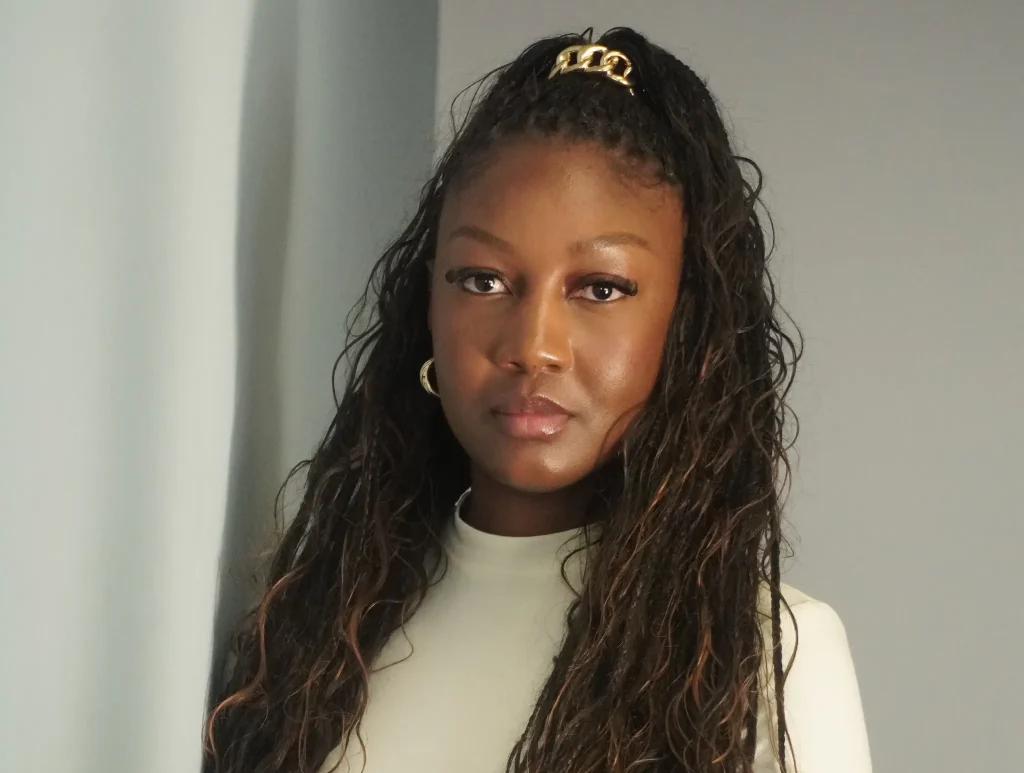
Covo is an AI-powered platform built on a simple observation: Africa already buys through people, through WhatsApp, word of mouth and trusted recommendations, but no tool connects that trust to a brand’s actual sales data. In practice, Covo matches brands with creators using real sales data rather than follower counts, building the campaign automatically and enabling creators to earn commission on what they actually sell.
The company is post-revenue. It has raised R200 000 and won a place at Dogpatch Labs in Dublin through the Irish Tech Challenge. It has built a brand waiting list of companies eager to come on board, registered more than 500 African creators, and is reaching 70 000 creators across 60 countries through a key partnership.
“I’m passionate about using technology and creativity to build solutions that connect people and grow communities,” says Moeca.
That passion, combined with a large dose of perseverance and commitment, is paying off. Covo has been shortlisted for ALX Ventures, ALX’s own startup accelerator and investment arm, and was also nominated as a delegate to the AI for Developing Countries Forum, an international forum focused on expanding AI access and capability across the Global South.
The growing pattern across Africa
Stories like those above are not the exception. Across South Africa, and the continent more broadly, growing numbers of young women are building businesses out of necessity as much as ambition, often with no capital behind them and a great deal resting on the outcome.
ALX’s own data reflects that shift. Of the more than 347 000 young people who have completed an ALX programme, 55% are women.
The stories of Tebalelo Mabasa, Boitumelo and Naledi Moroke, and Boitumelo Moeca reflect very different stages of a business journey: building, proving a service can pay, and scaling a platform. Each of these women may describe herself as a work in progress, changing and adapting as her business grows.
ALX’s career accelerator programmes are just one of the threads woven within the fabric of these young women’s stories; the sharpest is the unemployment rate they are building against – 37.5% for women, against a national 33.6% – and that is reason enough to explore the programmes that helped make their stories possible.
