



Not everyone accepts that Anthony Fauci’s Fifth Amendment testimony closes the book on Covid-19’s unresolved questions. This piece, written by Prof Colleen Aldous, a scientist, argues that dissenting voices were sidelined during the pandemic, and that Fauci’s enormous public authority carried an obligation to answer — not just a legal right to stay silent. It raises pointed questions about the Wuhan funding trail, lockdown advice and record-keeping that the author says deserve scrutiny regardless of who is asking them. BizNews publishes this as part of our commitment to airing genuine debate: read it alongside and decide for yourself where the evidence leads.
By Prof Colleen Aldous
On 29 July, a deep wound was reopened. The trauma of the COVID-19 pandemic was suddenly in my face again. I remembered the fight for science that a small group of us undertook: a fight for transparency, intellectual honesty and a future in which the public would never again be so easily misled.
I am no longer certain that this fight will ever be won. Much of the mainstream media, including organisations participating in the Trusted News Initiative, still appears reluctant to examine alternative ideas or inconvenient truths. Legitimate scientific disagreement is treated as a threat rather than an essential part of science.
During the COVID-19 years, a minority of clinicians and scientists across the world questioned the origin of SARS-CoV-2, its transmission, lockdowns, vaccine policies and the rejection of repurposed treatments. We were marginalised by those in power and the institutions that deferred to them.
Yet many questions we were punished for asking are now recognised as legitimate. Patients and families tell us that early treatment with hydroxychloroquine or ivermectin saved their lives. A possible laboratory-associated origin, once dismissed as conspiracy theory, is now treated as credible by several US intelligence agencies. Serious vaccine injuries are formally recognised, even if their full consequences remain contested.
This does not mean every dissenter was right about everything. It means science should have confronted these questions openly from the beginning and a fair scientific contest could have led to a different outcome for the pandemic.
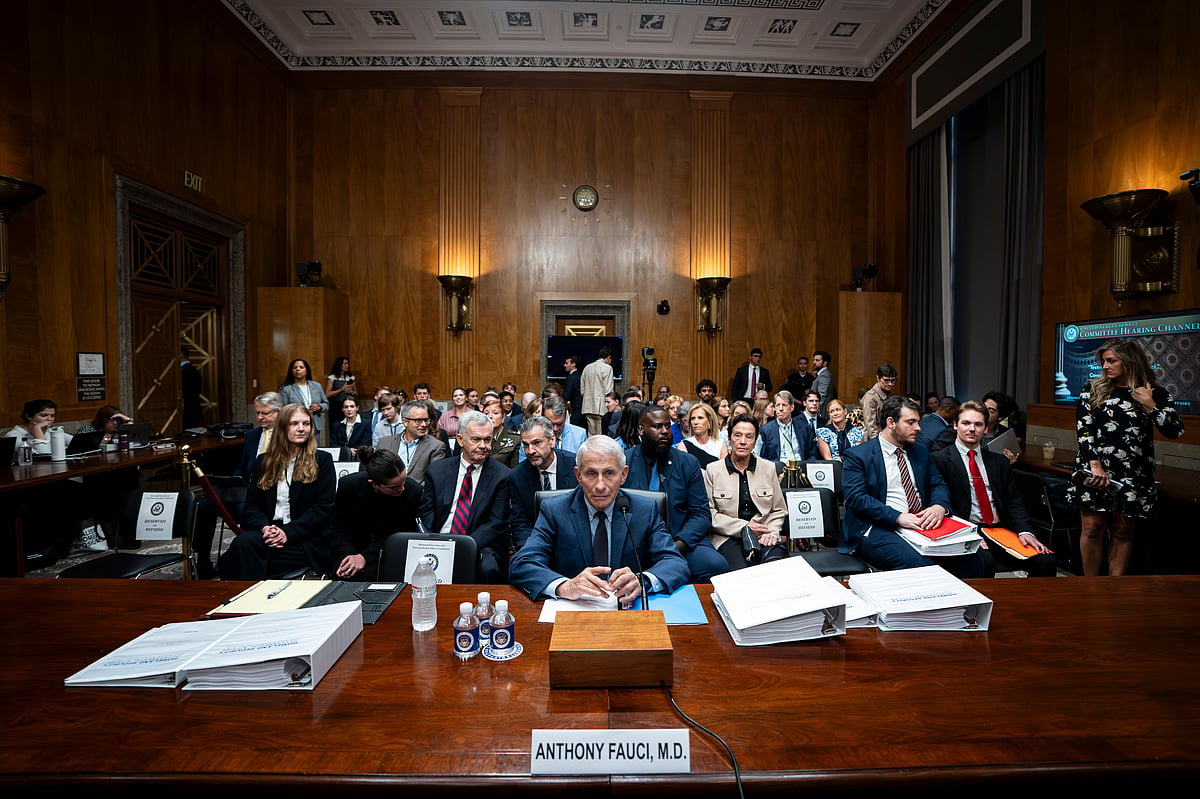
On 29 July 2026, Dr Anthony Fauci appeared under subpoena before the United States Senate Committee on Homeland Security and Governmental Affairs. After delivering an opening statement, he invoked the Fifth Amendment again and again and again. Not engaging with any of the questions posed to him. For over three hours, the man who had spoken with the authority of science, who stated “So it’s easy to criticise. But they’re really criticizing science, because I represent science”, refused to engage with the scientific and public-policy questions placed before him.
Senator Rand Paul’s questions cannot all be dismissed as vengeance. Some were confrontational and unnecessarily personal and this has opened Senator Rand Paul up to criticism too. But beneath the hostility were serious questions supported by documents, previous testimony and Fauci’s own pandemic diaries.
What did Fauci know about a possible laboratory origin in early 2020? Why did his private records show scientists discussing unusual features of the virus while the hypothesis was marginalised publicly? What was NIAID funding through EcoHealth Alliance and the Wuhan Institute? Why did Fauci deny that it was gain-of-function research when other scientists disagreed? Did Fauci or his staff delete federal records? How can his denial that he recommended lockdowns be reconciled with diary entries recording that he encouraged closures? These are questions everyone across the globe needs answers to.
These questions concern research ethics, preservation of evidence and the relationship between private uncertainty and public certainty. Citizens are entitled to know whether competing hypotheses were considered fairly and those exercising authority acted transparently.
Although we may feel that invoking the Fifth Amendment is an admission of guilt, it is not. It would be legally irresponsible to claim that Fauci’s silence proves that he funded the creation of SARS-CoV-2, organised a cover-up or committed a crime. But constitutional protection and public accountability are not the same thing. We still need the answers.
Fauci was the world’s most recognisable scientific authority during the pandemic. Our own government advisors were parroting what Fauci said. His words influenced presidents, health authorities, universities, employers, schools and families. Policies justified through his authority affected livelihoods, education, medical treatment, bodily autonomy and the final moments people spent with dying relatives. Such authority creates an obligation to explain.
In the last hours of his presidency, President Joe Biden issued Fauci a sweeping pardon covering federal offences connected with his official service from 2014 to January 2025. Why would a good scientist need this? But even if Fauci was legally entitled to say nothing, was silence an adequate response from a scientist who repeatedly asked the world to trust him? As a scientist, I contend that it was not.
The media response has deepened the problem. International media have been relatively silent, and in the US, the hearings have been reported as a spectacle. A gladiator fight of Fauci versus Paul, the Fifth Amendment and the committee’s partisan divisions. The underlying questions whose truthful answers could impact all our futures have received little attention. The media’s role is to examine the documents, consult independent experts and tell citizens what is established, disputed and unknown. Questions should be judged by their validity, not by who asks them. The media should not be presenting these hearings as merely a political circus.
The questions should be separated from this American domestic squabble. Documents do not become irrelevant because a partisan committee produces them. Diary entries do not cease to exist because an adversary quotes them. Apparent contradictions do not disappear because those identifying them have political motives. Equally, Fauci’s silence does not transform allegations into facts. They remain unanswered questions only.
So where to from here?
Investigative journalists should follow the grant records, laboratory documents, emails, diaries, scientific publications, intelligence assessments and sworn testimony. This is difficult if the journalists salary is paid by a publisher that is signed up to the Trusted News Initiative. The USA Congress should investigate through a genuinely bipartisan process in which members see the same evidence and allegations are distinguished from findings.
The scientific community must examine how uncertainty, dissent and risky research were managed. The media must ask whether efforts to counter misinformation suppressed legitimate disagreement. Dissenters must apply the same discipline, distinguishing between suspicion and evidence, and between evidence and proof. The way forward is neither automatic trust nor automatic disbelief. It is radical transparency and the courage to keep thinking.
Release the records, preserve the communications and protect whistleblowers. Test competing explanations against the same standards. Admit uncertainty and correct errors publicly. Require those who exercised extraordinary authority to account for its use.
Fauci’s silence must not become the final word. Nor should media reluctance determine what citizens are permitted to know. We must never surrender our judgement to authority, consensus or “the science” presented as unquestionable truth.
The wound reopened because the pandemic has never been adequately accounted for. It will not close through silence. It will close only when truth is pursued without fear or favour, and when citizens remain alert, questioning and determined never again to be duped.
Sign up for your early morning brew of the BizNews Insider to keep you up to speed with the content that matters. The newsletter will land in your inbox every morning on weekdays. Register here.
Support South Africa’s bastion of independent journalism, offering balanced insights on investments, business, and the political economy, by joining BizNews Premium. Register here.
If you prefer WhatsApp for updates, sign up to the BizNews channel here.
