



In January 2012, Wawira Njiru raised A$1,680 to start Food4Education. As someone who grew up seeing children in her community struggle with hunger, and after speaking with local schools, she realised that for many children, food was inseparable from education. It was what made education possible.
Fourteen years later, Food4Education has grown into an organisation serving 700,000 children every school day and working towards reaching one million by July 2027. Along the way, Njiru has built more than a school-feeding programme. Food4Education has become a model for how investing in children can strengthen local agriculture, create jobs, build infrastructure and contribute to Africa’s wider human capital.
The scale of that work has earned Njiru global recognition. In 2026, she was named a DVF Leadership Award honouree, joining a group of women recognised for their leadership and impact. She was also named to the TIME100 Next list, which celebrates emerging leaders shaping the future. Yet, for Njiru, the recognition is less about her than it is about what the work represents: an African organisation, built by Africans to solve an African challenge, proving what is possible when local ideas are given the opportunity to grow.
In this conversation, Wawira Njiru reflects on the journey from feeding 25 children with a basic kitchen to building a system serving hundreds of thousands, her vision for an Africa where no child has to learn hungry, the importance of African ownership in solving African problems, and what it takes to build something that can outlive its founder.
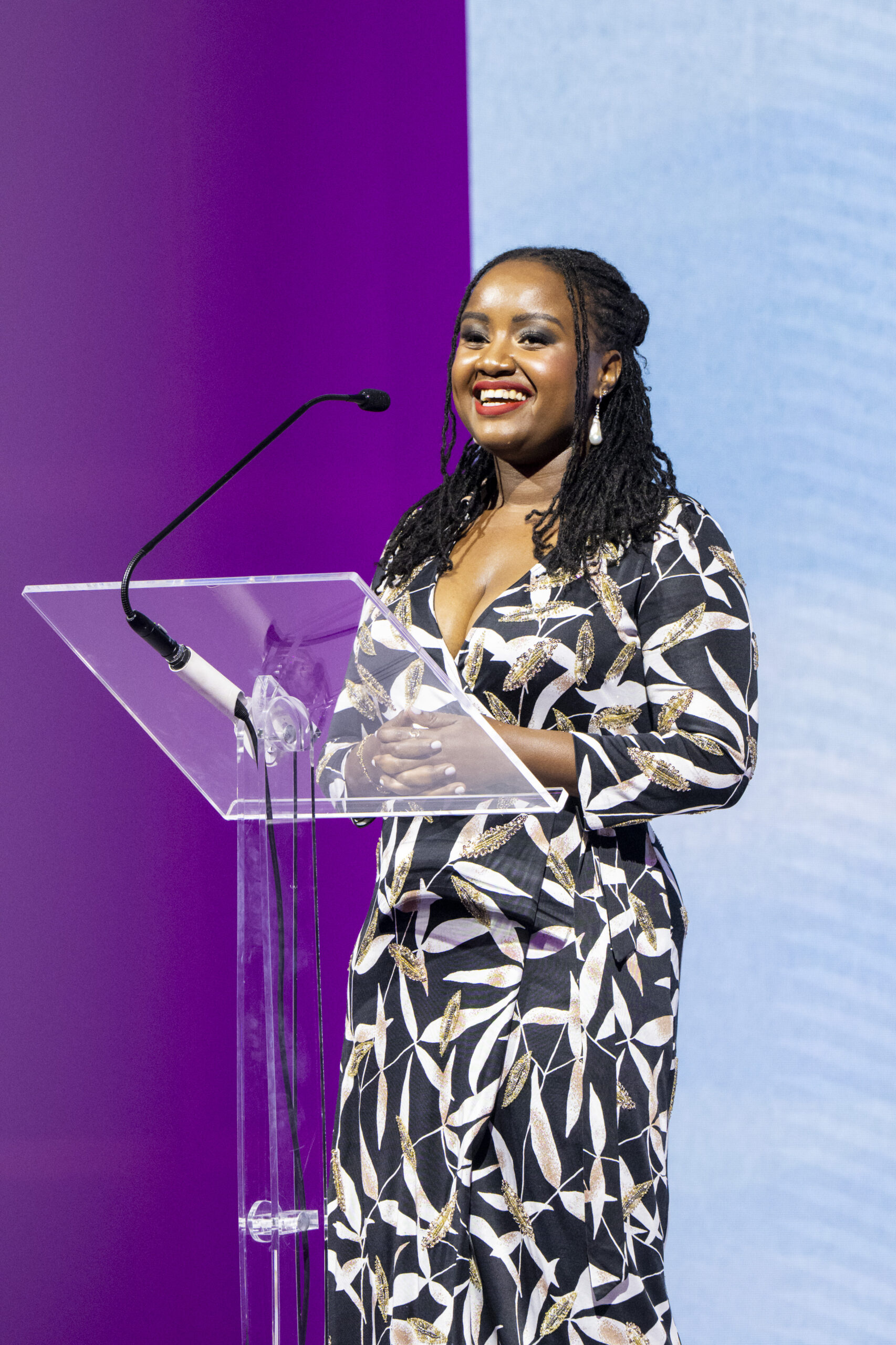
Wawira Njiru
Hello Wawira. Congratulations on being named a 2026 DVF Leadership Award honouree and, most recently, to the TIME100 Next list. At this stage of your journey, what does this recognition mean to you and the work that you do?
It means a great deal, particularly because of what the DVF Leadership Awards represent: women who have dared to build, lead and create change in their own way. But I think recognition has changed for me over the years. When I started Food4Education, I was 21 years old, feeding 25 children from one small kitchen in Ruiru. My biggest ambition was to reach 100 children. Today, we serve 700,000 children every school day, and we are working toward one million by July 2027.
So when recognition happens, I think less about myself and more about what it says about the work. It says that an African organisation, built by Africans to solve an African challenge, can build something at enormous scale and that the world is paying attention.
I also think about the thousands of people who built this with us. The women working in our kitchens, the farmers who grow our food, the parents who contribute to their children’s meals, our team, our government partners and, of course, the children themselves. This recognition belongs to that entire ecosystem.
I said at the DVF Awards that what began as a passion project has become the beginning of my life’s work. That is really how I feel. The recognition is wonderful, but what excites me most is how much further there is to go.
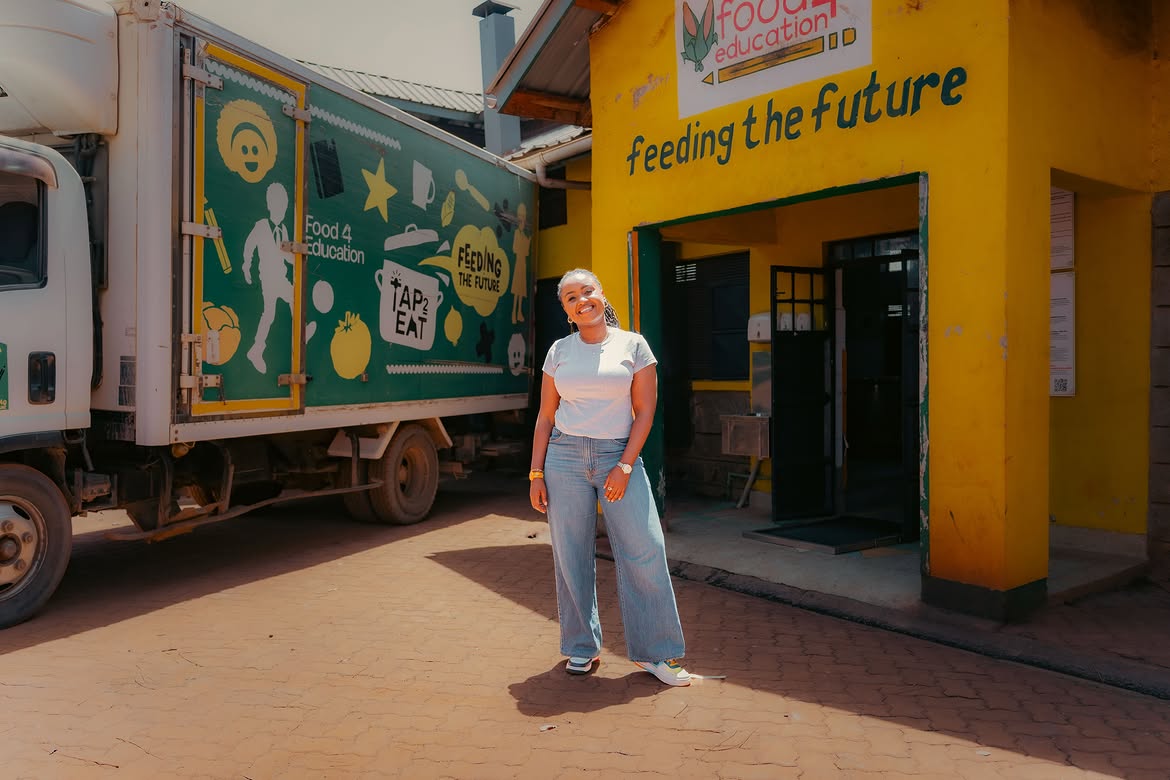
You started with 25 children to solve child hunger and education. Today, you are thinking about millions of children and a model that could influence how Africa approaches school feeding. If there were no limitations, what would your absolute dream for Food4Education be?
My dream is actually very simple: that no African child ever has to learn hungry. But achieving that requires us to think much bigger than food.
By 2050, one in four people on Earth will be African. That makes investing in the continent’s next generation one of the greatest opportunities in the world. The question is whether we invest in those children now. Africa’s greatest asset is its human capital, and we cannot wait until children become adults to begin investing in them.
I like that
Thank you. So if there were no constraints, I would want every African government to have the infrastructure, financing, technology and local supply chains required to feed every child in school, every day. I would want those systems to create markets for African farmers, jobs for young people and women, stronger local food systems and healthier, better-educated children.
We are beginning to see what that can look like in Kenya. Food4Education now serves 700,000 meals every school day. More than 80 per cent of our produce is sourced locally; we have created more than 6,000 jobs, and our procurement has already created a market worth more than $50 million for Kenyan farmers.
These are really impressive numbers, but what would you love people to say about the work in, let’s put a number, 30 years from now?
Thirty years from now, I hope people don’t talk about Food4Education primarily as an organisation that fed a lot of children. I hope they say we helped change what Africa believed was possible. That we showed school feeding could be public infrastructure. That investing in children could strengthen an entire economy. And that we built something strong enough to continue without me.
That, to me, would be success.
I like your ideas around African ownership. How do you think Africa can stop importing solutions to problems that Africans are capable of solving themselves?
I don’t think Africa’s problem is a shortage of ideas or talent. We have extraordinary builders across this continent. What we need is the confidence, capital and institutions to back them at the scale of the problems they are trying to solve.
There is also a tendency to think that something built elsewhere can simply be imported and replicated. But context matters enormously. When we enter a new country, our job is not to arrive with a Kenyan template and say, “Here is the answer.” You have to understand what already exists. What is government already doing? What infrastructure is already there? What are families already contributing? What do farmers already grow? Where are the gaps?
What would you want African governments, philanthropists and young Africans to understand about building solutions that are genuinely rooted in the continent?
One of our principles is to meet governments and communities where they are, not where we wish they were. Scale comes from building on what already exists and strengthening it.
And this is why I believe African governments have to be central. Philanthropy can take risks, help prove what works and provide catalytic capital, but you cannot philanthropically fund public infrastructure forever. In Kenya, families and government are investing alongside us. That shared ownership is part of what makes the system sustainable. Through FY27, government and family co-investment alongside Food4Education will total nearly $70 million.
For young Africans, I would say: don’t wait for perfect conditions. Food4Education started with about $1,200, 25 children and one very basic kitchen. I have always asked, “What is accessible to me? What can I do with what is around me?”
Start there. Prove something. Learn. Build trust. Then keep pushing it to the next level.
At what point did you realise that Food4Education could not just be about giving children a meal, but about changing the systems around food, education, employment and opportunity?
I don’t think there was one dramatic moment. The system revealed itself as we grew. At the beginning, the problem looked very immediate: a child is hungry, so feed the child. But even that first meal required a cook, food, a kitchen, a school willing to work with us and money to pay for the next meal. As we grew, every part of that became a system.
If you are feeding hundreds of thousands of children, you need farmers producing food at scale. You need kitchens and logistics. You need technology that tells you how many children ate and where. You need financing. You need government. You need thousands of people doing their jobs well every single day.
And then you realise that all of those things create value themselves. A school meal creates demand for a farmer. It creates a job for a worker. It requires infrastructure. It strengthens local supply chains. And ultimately, it is an investment in the human capital of a child.
What have you learned about building something that can outlive its founder?
Building something that outlives you means accepting that eventually it cannot depend on your energy, relationships or ability to solve every problem. It has to become institutional. The economics have to work. The data has to be visible. Government and communities need a stake in it. You need leaders who can make decisions without you.
I want Food4Education to become the kind of institution where the mission remains absolutely clear even when I am no longer in the room.
