



Vaping has become increasingly popular not only among young adults but also among teenagers. Similar to cigarettes or cannabis (dagga), it may appear appealing or socially accepted within peer groups, but it carries harmful consequences.
The Springs Advertiser spoke to specialist physician Dr Nkosinathi Luthuli of Life Springs Parkland Hospital, who shared insight into the effects of vaping on young people’s development and its potential long-term health impacts.
- From a medical perspective, what does vaping do to the developing bodies and brains of young people?
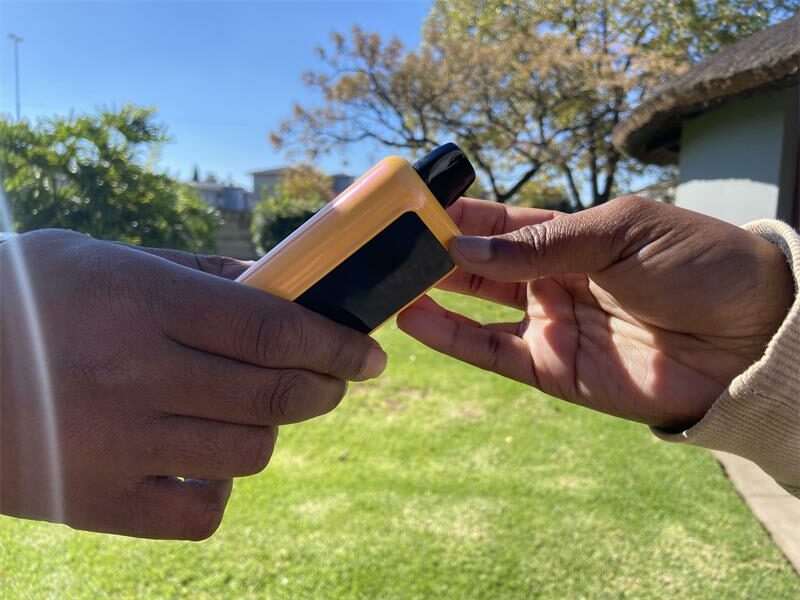
Vapes contain liquids that often mix nicotine (a neuro/psychoactive stimulant found in cigarettes) with flavourants and substances like propylene glycol, which, when heated, turns the liquid into aerosols that are inhaled into the lungs.
When looking at the effects on developing bodies, we examine the cellular, organic, physiological, and psychological effects of these various compounds, together with the behavioural issues associated with smoking or vaping, to understand the overall impact.
Full neurological development happens from ages of 10 to 24 years, which is the “adolescence period” range. This represents a period of increased biological sensitivity to the stimulatory and reinforcing properties of nicotine and other psychoactive stimulants.
The pre-frontal cortex is one of the most critical and last areas in the brain to fully develop and is responsible for critical thinking, decision making, socially acceptable behaviour and personality.
ALSO READ: Kwa-Thema youth activist selected as co-author for 2026 South African Child Gauge
By impacting this area during the development phase, early vape users are at risk of long-term, often irreversible traits such as lack of impulse control, lack of cognitive maturity, emotional instability, mood disorders, including anxiety and depression, and learning difficulties.
Nicotine interferes with the action of endogenous (self-produced) acetylcholine by acting as both an agonist and antagonist through nicotinic acetylcholine receptors.
Acetylcholine provides a complex regulation of reward and motivation through its actions on dopamine brain circuits. These range from feelings of “a high or a rush” to satisfaction, calming and excitement sensations.
As nicotine wears off, these are replaced by cravings which take the form of anxiety, irritability, restlessness and hyperactivity. Nicotine is thus a highly addictive substance and, in developing adolescent brains, induces repeat reward-seeking (addictive) behaviour.
There is also progressive tolerance that develops with repeated use, meaning users begin to require higher doses to achieve the same sensation. This is also a time when users, particularly younger ones, may “graduate” to other substances such as marijuana, narcotics, prescription medications like benzodiazepines and opioids.
Physiologically, beyond nicotine, vapes contain harmful chemicals that induce cellular inflammation, oxidative stress and cell death, alter gene expression and impact development well beyond the brain.
Flavourants contain chemicals with known harmful effects such as diacetyl (associated with bronchiolitis obliterans), cinnamaldehyde (which causes inflammation and cell death), menthol (which increases cough and airway spasm), formaldehyde (highly toxic), heavy metals and free oxygen radicals, all of which increase long-term risks including cancer.
- What are the most common short-term health effects you’re seeing in teenagers who vape?
Over both the short and long term, the effects can be split into:
Psychological effects – especially when denied access to nicotine include anxiety, irritability, attention deficit and hyperactivity, fatigue and boredom.
Physiological effects associated with nicotine range from palpitations, chest discomfort, recurrent cough, tight chest, difficulty breathing and muscle cramps.
- Are there any long-term risks linked to early vaping that we already understand or are beginning to see?
We are, with vaping, at the same stage as we were with tobacco from the 1920s to the 1950s and 1960s, where we are seeing a massive increase in consumption often incorrectly associated with status, being “cool” and feeling socially liberated, while we lack conclusive epidemiological data on long-term effects. Much of the current evidence, especially molecular biological data, comes from in vitro laboratory and animal studies.
Nevertheless, vaping is associated with oxidative stress and cell death, leading to an inflammation cascade that can manifest as chronic cough, airway hyperactivity, and conditions such as asthma, sinusitis and laryngitis.
Although younger people are at relatively lower risk for cardiovascular diseases such as heart attacks and strokes, exposure to vaping increases risk factors and accelerates the development of these conditions.
There is also an increase in sustained elevated blood pressure and pulse rate, which places extra strain on the heart and blood vessels. Young people are also exposed to targeted advertising through influencers and promotional events.
- Have you noticed any patterns in mental health impacts, such as anxiety, stress or concentration issues among young vapers?
While it may not always be immediately clear what the cause and effect are, the increase in diagnoses of mental and psychological conditions in increasingly younger children is alarming. These include stress, anxiety, hyperactivity disorder, attention deficit, and most alarmingly, parasuicide and suicidal ideation or attempts.
Almost invariably, these young people have a history of experimenting with or abusing substances. Vapes are easy to conceal, have no lasting odour like cigarettes, are easily accessible, and are increasingly a substance of choice for younger children due to lower stigma compared to cigarettes and marijuana, and a perception that they are harmless.
Vapes containing THC are also relatively accessible and are thought to be “cleaner” than a marijuana joint. THC can cause memory impairment, poor coordination, paranoia and psychosis.
ALSO READ: University-led initiative reaches Tsakani teens in pregnancy prevention drive
- What misconceptions do young people often have about vaping and its safety?
The most common misconception is that vaping is safe. Cigarettes (which contain more than 500 harmful compounds) are indeed more harmful due to substances like tar, carbon monoxide and arsenic. However, vapes are not harmless.
By comparison, a 5% (50mg/ml) nicotine e-liquid contains 50mg of nicotine per millilitre of liquid, compared to 10–12mg of nicotine in a tobacco cigarette. A single vape pod can contain as much nicotine as one to two packs of cigarettes, resulting in much higher addictive potential, tolerance and long-term effects.
Another misconception is that nicotine-free vapes are harmless, which is not true. They still contain chemical compounds such as propylene glycol and flavourings that cause harmful effects at a cellular and airway level.
- What warning signs should parents and teachers look out for if they suspect a young person is vaping regularly?
This is perhaps the most important takeaway. Young people are at very high risk due to peer pressure, ease of access, ease of concealment and the belief that vaping is harmless.
Early symptoms may include anxiety, restlessness and wanting to be alone, which can point towards vape use.
Over time, behavioural changes may include mood swings, hyperactivity, boredom, and, physically, unexplained chronic cough, snuffles, constant throat clearing, and frequently asking for money.
With easy access through online delivery platforms, parents may notice repeated and unexplained deliveries. Most vapes are disposable devices, so parents should also look out for these in the trash.
At Caxton, we employ humans to generate daily fresh news, not AI intervention. Happy reading!
