



By: Abigail Teye
An intensive four-day workshop aimed at strengthening media reporting on science, technology and innovation (ST&I) has opened in Accra, bringing together journalists, researchers and policymakers to deepen collaboration between science and the media.
The initiative is organised in collaboration with the British High Commission and the Responsible Artificial Intelligence Lab (RAIL) at the Kwame Nkrumah University of Science and Technology (KNUST), alongside the Ministry of Environment, Science, Technology and Innovation and the Ministry of Communications, Digital Technology and Innovations.
It forms part of a five-year UK–Ghana Science, Technology and Innovation Strategy (2023–2028), which recognises the critical role of the media in communicating research and innovation to the public.
Delivering the keynote address at the opening session on Tuesday, 10 March 2026, Abigail Opoku-Mensah, manager of the Ghana National Research Fund (GNRF), highlighted the critical role journalists play in bridging the gap between scientific discoveries and public understanding.
“Ghana is at a pivotal junction in its development trajectory. We aspire to a knowledge economy – an economy in which value is created not only through the extraction of natural resources but through the generation and application of ideas.”
According to her, Ghana’s research ecosystem continues to grow through investments in institutions such as the Council for Scientific and Industrial Research (CSIR), universities and other research centres across the country. However, she said the real challenge lies in ensuring that scientific discoveries are communicated effectively to citizens who can benefit from them.
“Our agricultural scientists are developing drought-resistant crop varieties. Our environmental researchers are modelling the impact of coastal erosion. Our public health researchers are tracing the linkages between pollution, land use and the rise of non-communicable diseases,” Opoku-Mensah said.
“This knowledge exists. It has been generated with public funds through the sacrifice and dedication of our scientists.” Yet she questioned whether the information is reaching farmers and communities who could directly benefit from these innovations.
“The question is: does the Ghanaian farmer know about the drought-resistant maize that has been developed by these researchers?” she asked. “The answer is often no. A knowledge economy cannot be built on knowledge that the public does not understand.”
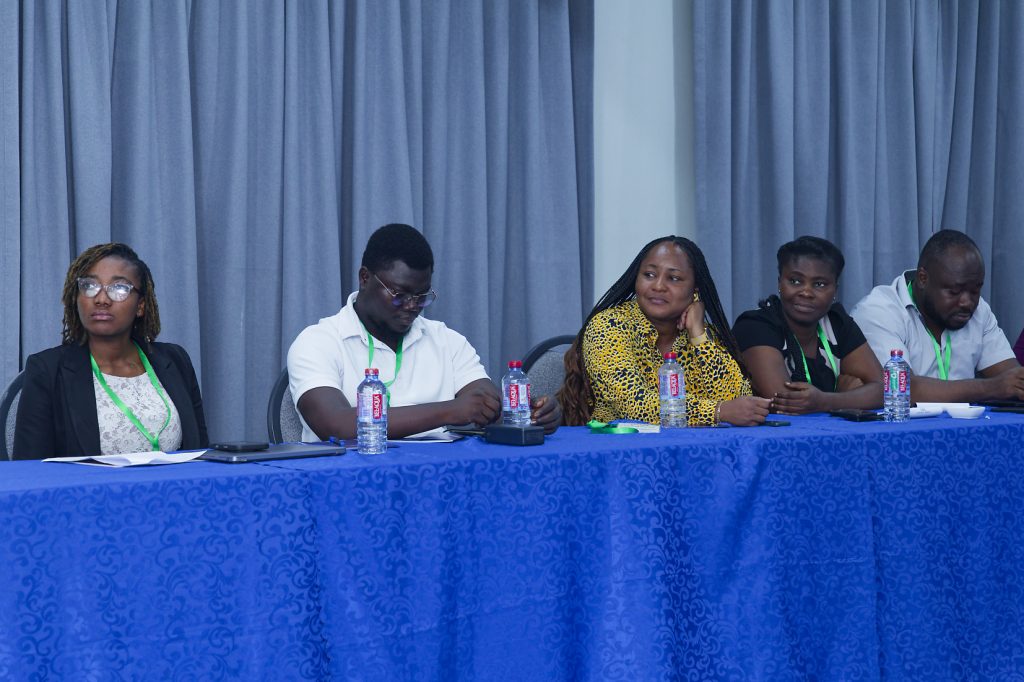
Opoku-Mensah said the gap between research and public awareness is largely a communication challenge. “There is a significant communication gap, and the science, technology and innovation reporter serves as the bridge across that gap,” she noted.
She described science journalists as an essential component of Ghana’s knowledge ecosystem. “You are not a peripheral figure in Ghana’s knowledge ecosystem. You are critical infrastructure,” she said, adding that the GNRF’s mandate under Act 1056 of 2022 goes beyond funding research to ensuring that knowledge generated through research is transferred and applied to solve real-world challenges. “Research does not end when a paper is published in a journal,” she said.
“Our responsibility is not only to fund research but also to ensure the transfer of knowledge and technology. The process ends when the knowledge reaches the people who need it most, and that is where the media comes in.”
Also addressing participants, Prof. Jerry John Kponyo, principal investigator and scientific director of the Responsible Artificial Intelligence Lab (RAIL), highlighted the growing role of artificial intelligence in addressing global development challenges.
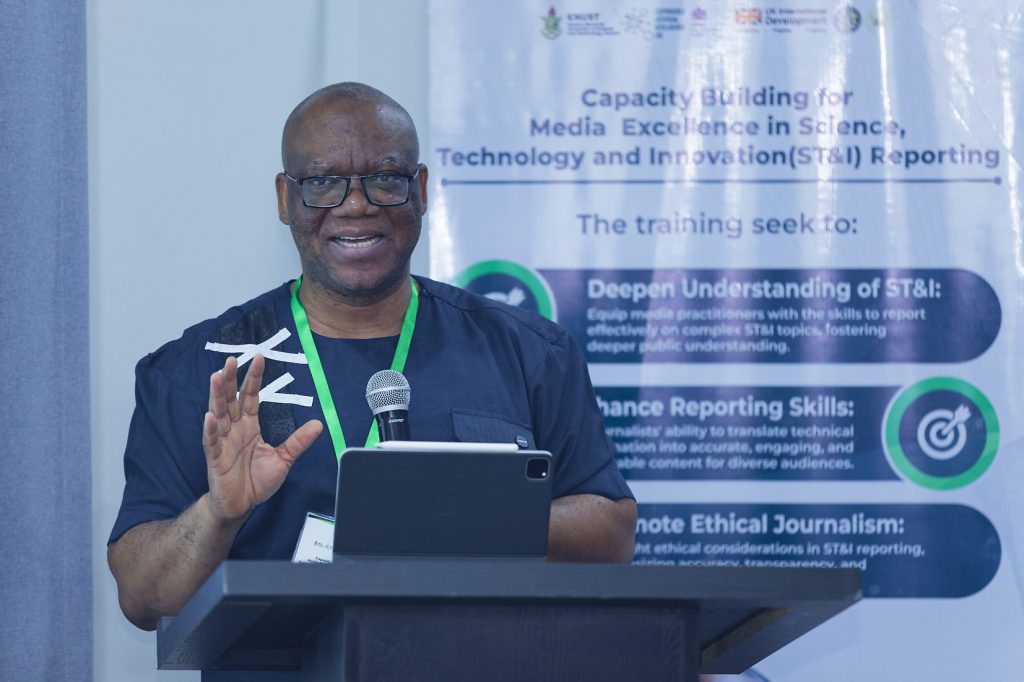
According to him, the lab is applying AI technologies to support the United Nations Sustainable Development Goals in sectors such as agriculture, healthcare, energy and education, while also developing solutions to bridge accessibility gaps for persons with disabilities.
“It is one thing doing research and it is another thing communicating the results of your research,” Kponyo said. “Irrespective of how good your research is, if people cannot benefit from it – if the man on the street does not see his life transformed by it – then it is of no use.”
He stated that initiatives such as the ST&I media training help build journalists’ capacity to understand scientific research while also encouraging academics to communicate their work more confidently. “This workshop tackles two sides of the same coin,” he said.
“We are building the capacity of journalists to understand science, while also encouraging researchers to communicate their work publicly. Together we can break down these innovations and even translate them into local languages so that the ordinary Ghanaian can understand and benefit from them.”
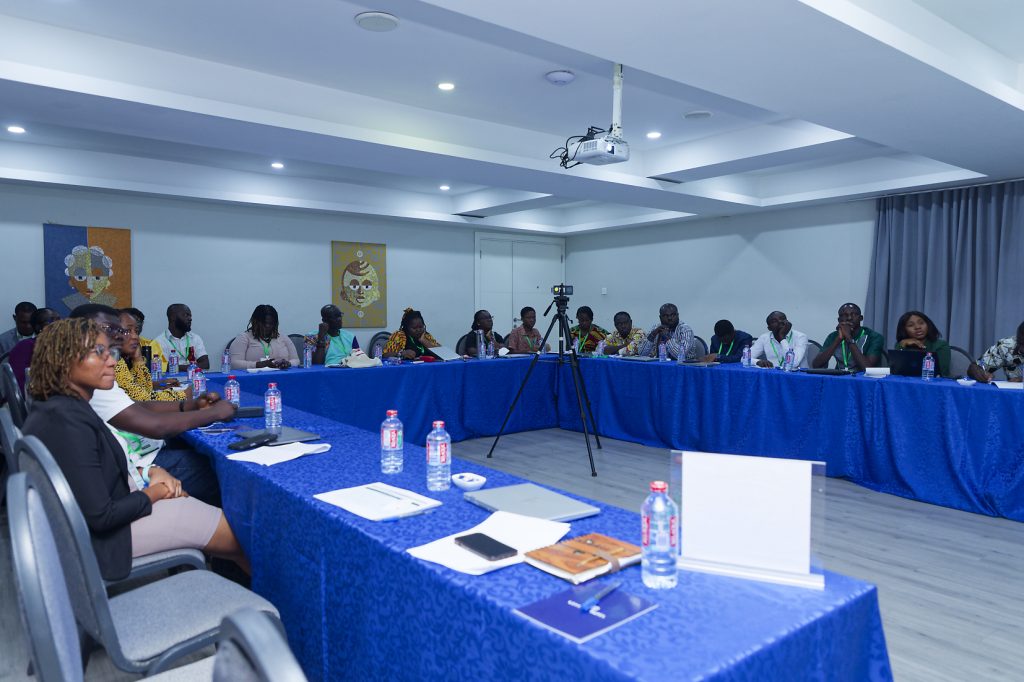
The training, held from 10–13 March 2026 at the Central Hotel, Ridge, forms part of Phase Three of the Capacity Building Programme for Media Excellence in Science, Technology and Innovation Rapportage.
The workshop brought together 25 selected journalists and digital content creators from across the country for specialised training aimed at strengthening public understanding of science, technology and innovation. Participants are being equipped with practical skills to translate complex scientific and technological concepts into engaging, accurate and accessible stories for the Ghanaian public.
The broader partnership between Ghana and the United Kingdom seeks to strengthen cooperation in research, innovation and policy development by promoting joint university collaborations, knowledge transfer and capacity-building programmes.
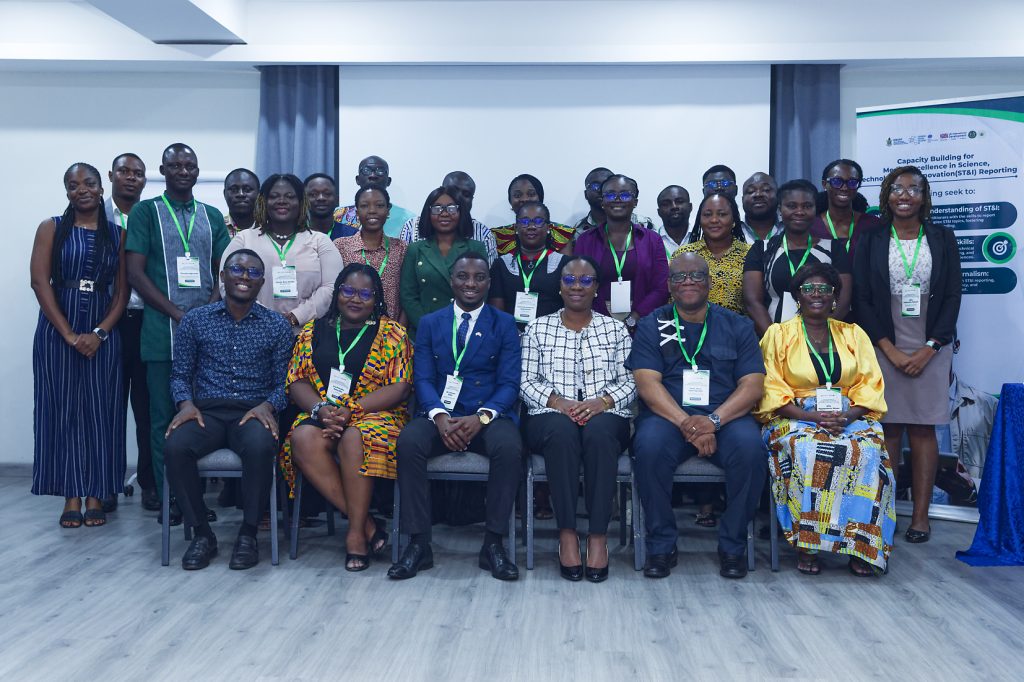
By leveraging the UK’s global expertise in science and technology and Ghana’s growing research ecosystem, the strategy aims to create a sustainable platform that supports technological advancement, economic growth and improved livelihoods for citizens in both countries.
