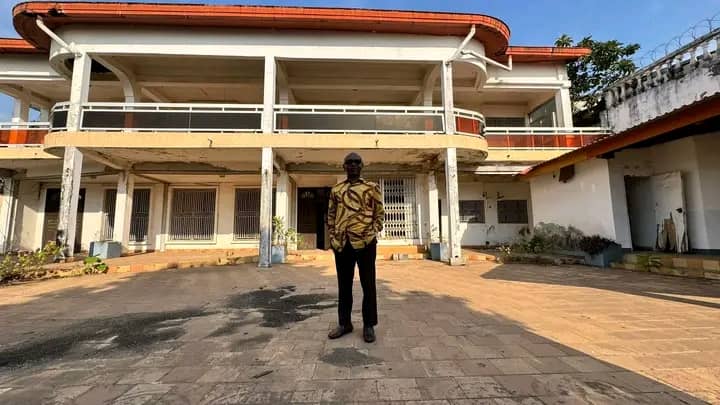
A leading Pan-African campaigner, Ras Mubarak, has appealed to President John Dramani Mahama to urgently intervene to preserve Villa Syli, the former residence of Osagyefo Dr Kwame Nkrumah in Conakry, Guinea, and to facilitate the repatriation of the late Ghanaian leader’s remaining personal belongings.
In an open letter dated January 8, 2026, addressed to the President, Ras Mubarak said the historic seaside villa—where Dr Nkrumah lived in exile from 1966 until his death in 1972—is rapidly deteriorating and risks being lost to neglect.
Ras Mubarak, who is leading the Trans Africa Tourism & Unity Campaign and an Africa-wide advocacy for a visa-free continent by 2030, said he recently visited Villa Syli and was alarmed by its state.
“I personally witnessed the deteriorating condition of the residence,” he wrote, describing crumbling facades, overgrown vegetation, damaged balconies and visible structural decay across the once-iconic white walls and tiled courtyard.
Villa Syli was provided to Dr Nkrumah by Guinea’s first President, Ahmed Sékou Touré, as a symbol of African solidarity following the 1966 coup that overthrew Nkrumah’s government. According to Ras Mubarak, the residence is not only a monument to Nkrumah’s life in exile but also a powerful symbol of the historic bond between Ghana and Guinea and the broader Pan-African struggle.
He stated that the villa served as a centre of intellectual and revolutionary activity, hosting key African liberation figures, including Amílcar Cabral. It was also where Dr Nkrumah continued writing and strategising for Africa’s liberation and unity.
“Villa Syli was not merely a refuge; it was a hub of Pan-African thought and action,” he said.
Beyond the physical decay of the building, the letter raises concern about some of Dr Nkrumah’s personal belongings, which are reportedly still packed in a garage on the premises and exposed to deterioration.
While many of Nkrumah’s artefacts—such as books, photographs and the metal coffin donated by Guinea—have been repatriated and are displayed at the Kwame Nkrumah Memorial Park in Accra, Ras Mubarak said the remaining items represent “an incomplete chapter of his legacy”.
He recalled the sensitive diplomatic history surrounding Dr Nkrumah’s death and burial in 1972, when Guinea initially buried him in Conakry before his remains were later returned to Ghana, arguing that the episode underscores the need for renewed cooperation between the two countries.
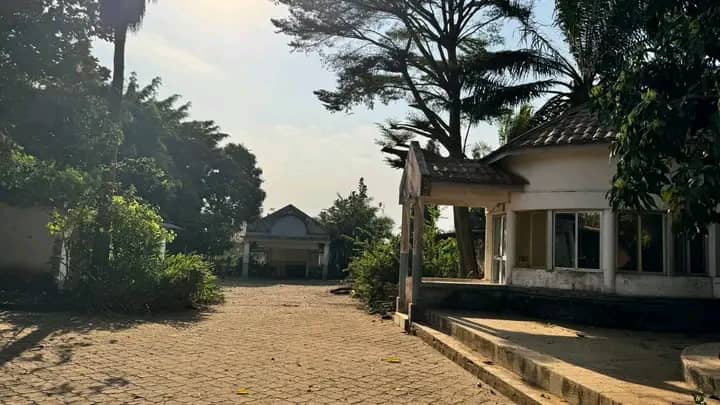
Ras Mubarak urged the Mahama administration to engage Guinean authorities through diplomatic channels to:
1.Facilitate the safe repatriation of Dr Nkrumah’s remaining belongings to Ghana for preservation and public education.
2.Collaborate with Guinea to restore Villa Syli, potentially through joint funding or international support, including UNESCO, given its Pan-African significance.
3.Strengthen Ghana–Guinea relations through cultural exchange programmes that highlight their shared history.
In addition to preservation, the campaigner proposed a bold repurposing of Villa Syli into a Pan-African Cultural and Educational Centre.
His proposal includes a museum wing dedicated to Nkrumah’s exile years, educational facilities for youth and scholars, spaces for cultural events, and eco-friendly renovations that maintain the villa’s architectural heritage.
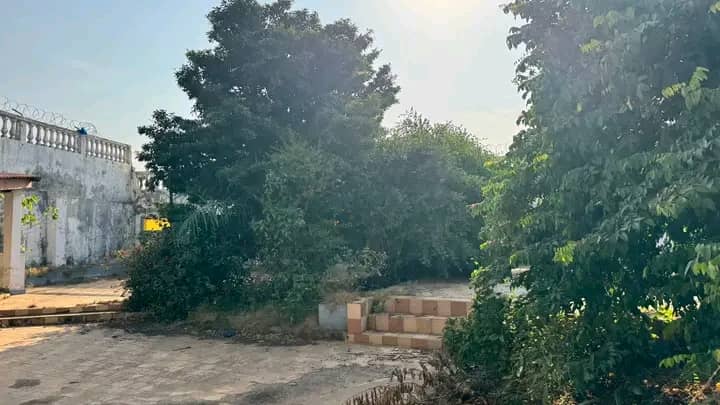
Such a project, he argued, could promote tourism, cultural diplomacy and economic ties between Ghana and Guinea, while serving as a living monument to African unity.
“This redevelopment would honour Dr Nkrumah’s vision of a united Africa and remind us of the solidarity shown when President Touré named him honorary co-president of Guinea,” he said.
Ras Mubarak appealed directly to President Mahama’s record on Pan-Africanism, heritage preservation and advocacy for reparations for slavery, saying intervention at Villa Syli would reaffirm Ghana’s leadership in protecting African history.
“I humbly appeal to you to act swiftly before this irreplaceable site is lost forever,” the letter concluded.
The open letter was copied to the Minister for Foreign Affairs, Samuel Okudzeto Ablakwa, and the Minister for Tourism, Culture and Creative Arts, Abla Dzifa Gomashie.